
AI is no longer a futuristic luxury, it’s a present-day ally for nonprofits.
⏱︎ Reading Time: 15 min.
TL;DR
This article explores how artificial intelligence is transforming the nonprofit sector, not by replacing human passion but by enhancing it. The integration of AI tools is leading to improved fundraising, more strategic outreach, and stronger relationships with supporters. Organizations using predictive analytics report up to 55% faster campaign results6, 23% higher ROI1, and major gains in donor retention(some increasing by 18–34%11).
AI helps nonprofits move beyond guesswork by analyzing over 400 data points per donor1, identifying patterns that inform smarter, personalized engagement. For example, an environmental group retained $23,000 in funding by identifying at-risk donors1, tools like chatbots now handle 72% of routine inquiries3, freeing staff to focus on high-impact work, and in grant writing, AI has reduced prep time by 40%4 10 12 17, allowing teams to craft stronger proposals that attract more funding9.
Operational efficiency is another win: automating data entry7, meeting summaries14, and multilingual content creation6 12 1 is cutting costs8 while expanding reach14 18. A health organization, for instance, connected with 14 new language communities through AI-powered translation tools14 18. Machine learning also improves volunteer screening and social media timing, boosting engagement, and reducing turnover9 11 12.
Despite the benefits, appropriation among smaller nonprofits remains low due to budget constraints, limited expertise, and ethical concerns15 16. However, the article stresses that affordable, even free AI tools exist14, and partnerships with tech volunteers or companies can bridge gaps16. The key is starting small (automating thank-you notes or using basic analytics) and scaling gradually13,17.
Ultimately, AI is not a magic wand but a strategic ally; When used thoughtfully, it can help nonprofits refine programs, deepen donor relationships, and scale impact efficiently17 19. By blending technology with human compassion, nonprofits can build a future where their missions thrive with precision, purpose, and reach.
Key Takeaways
Alright, let’s weave together the threads of deep understanding and clear communication. As someone who’s walked the corridors of technical development and now stands eager to bridge the gap, I’m genuinely excited to explore how the transformative power of AI is specifically reshaping the incredible work happening in the nonprofit sector. It’s time to demystify the tech and reveal how it’s not just for Silicon Valley giants, but a powerful amplifier for missions that matter.
Forget the magic show; this is about smart tools designed to give you back time and boost your impact. Did you know that organizations strategically using advanced donor prediction tools are seeing significantly higher returns (around 23% better ROI1) than those sticking to older methods?
That number isn’t just a statistic; it represents more resources flowing directly to the communities you serve, more programs funded, more lives changed. It’s the practical outcome of AI helping you focus energy where it counts most.
How AI is Shaping the Nonprofit Landscape
Looking across the landscape, we’re seeing a quiet revolution. Over half (58%) of mission-driven organizations are now integrating these tools to streamline everything from connecting with supporters to digging deeper into their data2. Think about platforms analyzing hundreds of data points on contributions and engagement.
They aren’t replacing human connection; they’re giving teams the insights to have better conversations, focusing on building relationships instead of wrestling with spreadsheets. We’ve seen inspiring examples, like one organization that gained 2,800 additional donors just by using smarter outreach strategies enabled by AI insights1.
But it’s not just about finding new donors. These tools are becoming guardians of existing relationships. Imagine identifying a supporter who might be drifting away before they disengage. One environmental group successfully retained 64 donors who were at risk of lapsing (preserving over $23,000 in vital funding1).
Beyond fundraising, AI is tackling the tedious tasks that drain our precious hours. Automating routine processes means staff can redirect their passion and expertise towards creative problem-solving, refining programs, and deepening community engagement. It’s not about replacing the heart of your mission, but giving it a smarter engine.
Understanding Intelligence in the Mission-Driven Context
Here’s what I see as the core shifts unfolding:
- Precision in Outreach: AI predicts donor behaviour by analyzing vast amounts of data (sometimes over 400 data points per donor1). This isn’t guesswork; it’s informed strategy.
- Data Power, simplified: Automated systems are helping 68% of organizations make sense of complex data2, turning numbers into actionable insights without needing a data science degree on staff.
- Smarter Engagement: Targeting outreach based on predictions can boost donor response rates drastically (we’re seeing jumps of 55%!1 11).
- Finding Supporters: Specialized platforms trusted by thousands of groups2 are making donor research more efficient and insightful.
- Keeping Connections Strong: Behaviour prediction isn’t just for acquisition; it helps proactively retain valuable supporters1 11.
Addressing Common Operational Challenges
The operational strategies across the nonprofit sector are undergoing a silent, but powerful transformation. AI solutions are stepping in to tackle persistent hurdles that have always made resource allocation and audience engagement, a challenging task.
Let’s break down how this “intelligence” actually looks, like in a mission-driven context. It’s platforms learning from past interactions to predict future donating patterns. It’s tools that can cut the sheer time spent on grant applications by 40%4 10, freeing up grant writers to focus on crafting compelling narratives that gather essential funding faster.
And yes, even the seemingly simple act of answering routine questions is being revolutionized. Chatbots are handling the bulk of basic inquiries (up to 72% for some organizations3), meaning your staff can dedicate their energy to the complex, nuanced work of building genuine relationships. Again, this isn’t replacing people; it’s amplifying their strategic capacity.
Think about common pain points: the hours lost to manual data entry (sometimes 15 hours a week per staff member!5). Automated systems can process this information incredibly fast (up to 23 times faster than manual spreadsheets5). We’ve seen organizations secure major grants, like a $1.5 million award3, partly by streamlining their application process using these specialized tools.
AI is also becoming a powerful ally in expanding your reach. Predictive models can identify high-potential supporters with remarkable accuracy (sometimes 89%5.), boosting the ROI of your campaigns. Crucially, translation tools are breaking down language barriers, enabling nonprofits to connect with and serve new communities (a health organization expanded outreach to 14 new communities with different languages, thanks to this tech14 18). These aren’t just minor tweaks; they are transformative shifts that turn limitations into opportunities for growth and deeper impact.
The Key Benefits of AI in Nonprofit Organizations
The measurable benefits are compelling. Organizations using predictive models report achieving campaign results 55% faster6. These systems help teams allocate resources with data-backed confidence, creating measurable impact through strategies grounded in real insights, not just intuition. It’s about empowering your team to do what they do best, but more effectively.
Algorithms analyzing given history and social patterns aren’t just churning numbers; they’re helping you understand who is most likely to connect with your message, boosting donor response rates through personalized outreach1 11 18. Tools generating multilingual content rapidly mean your mission can resonate across languages and cultures, expanding global engagement swiftly6 12 14.
Boosting Fundraising and Outreach
Crucially, behaviour prediction models are protecting your funding by proactively flagging donors at risk of lapsing1 11. When combined with insights on optimizing proposals, teams can secure significantly more grants (one analysis showed 14% more8). This learning capability ensures your energy and resources are focused where they will create maximum impact.
Improving Efficiency and Reducing Costs
Efficiency and cost reduction are natural outcomes. Automated systems are taking over the 72% of repetitive tasks that steal time7. We’ve seen examples of organizations cutting operational costs significantly while simultaneously improving program insights8. Since 2018, mission-driven groups embracing these tools have seen a remarkable 300% efficiency boost towards their sustainability goals6.
AI helps you understand your resources in real-time, allowing for quicker, more informed decisions, especially during crisis.
Practical Use Cases for AI Solutions for Nonprofits
Let’s look at some practical, real-world examples. What separates thriving organizations from struggling? Often, it’s their willingness to explore and harness the emerging tools effectively.
Consider relationship management: One organization saw a 22% reduction in donor attrition by using behaviour prediction models to identify and reach out to at-risk supporters with timely, personalized check-ins9.
Or think about volunteer management: machine learning helping groups like Goodwill screen 300% more volunteer applicants weekly while maintaining high standards9.
In resource development, the impact is profound. AI has helped analyze grant proposals to understand what resonates with specific foundations, leading to dramatic increases in conversion rates9.
Automated tools now draft 60% of initial application content9, freeing your experts to customize and perfect the appeals that truly connect with the audience.
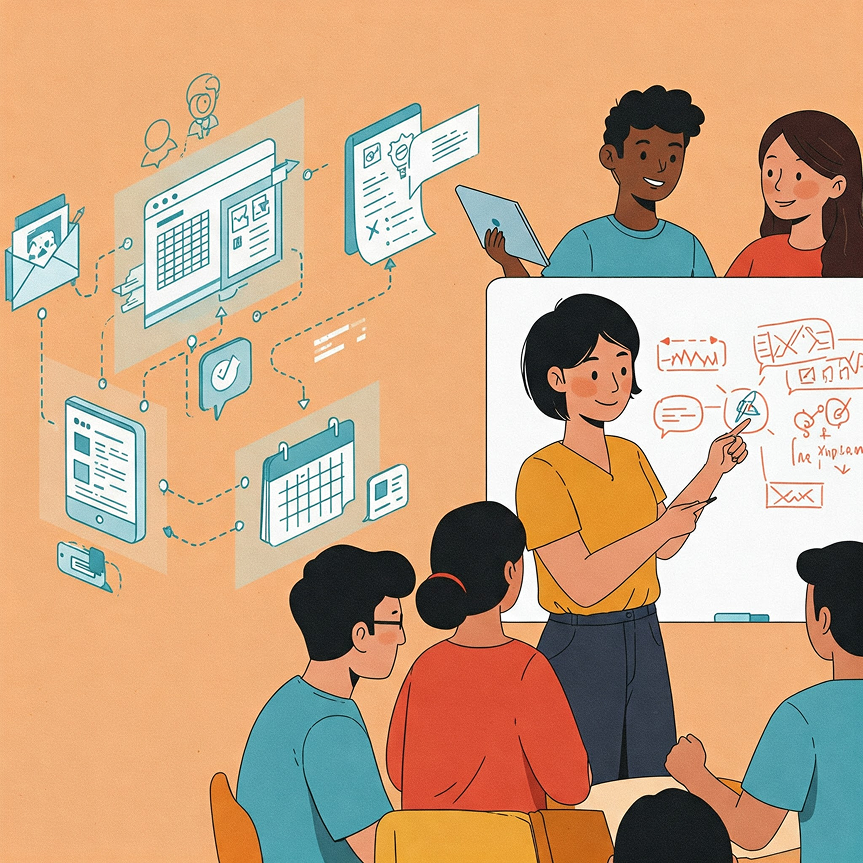
And when systems identify the optimal times to post on social media, engagement skyrockets, sometimes translating directly into increased donations during key campaigns9. As one development director perfectly put it: “These tools don’t replace human insight, they amplify our ability to connect.”10
We’re seeing dramatic improvements across the board:
- Donor retention rates jumping by 18-34% with predictive analytics11.
- Grant writing time dropping 40% using AI-assisted tools10.
- Social media engagement climbing 55% through content optimization11.
These aren’t hypothetical; they are real outcomes for organizations like yours. By automating repetitive work, teams are redirecting their energy towards the strategic priorities that drive lasting, meaningful change.
So, how do these powerful tools actually work? It’s about data analysis transforming raw numbers into strategic advantages. Over 73% of mission-driven groups are using these platforms12 to decode complex patterns and bridge communication gaps.
| Tool | Function | Impact |
|---|---|---|
| Momentum | Email automation | 47% faster donor responses12 |
| Google Analytics | Trend detection | 55% quicker strategy shifts12 |
| Grant Assistant | Proposal drafting | 40% time reduction12 |
Platforms are using advanced data analysis to predict donor behaviour with high accuracy, helping teams prioritize relationships and personalize tasks effectively12. Think about how much more impactful an appeal is when it’s tailored to an individual’s given history and interests! Tools are also revolutionizing communication beyond just fundraising.
AI meeting assistants are cutting background noise while generating call summaries14, saving precious hours for outreach teams. Translation tools are localizing content for numerous languages14, enabling global expansion. And tools that refine multilingual communications are improving donor engagement across cultures12.
If you’re thinking, “This sounds great, but where do we start?”, many platforms offer budget-friendly or even free plans for nonprofits14, helping you automate routine tasks quickly. The crucial first step is simply choosing the tools that align with your organization’s unique needs and mission.
Of course, integrating AI isn’t without its challenges. While nearly two-thirds of large organizations now use smart tools, only about a third of smaller groups do15. This gap often comes down to tighter budgets, potential skill shortages, and navigating its ethical considerations. It’s surprising, but only 24% of small teams have formal AI strategies, even though most are exploring these solutions15 16.
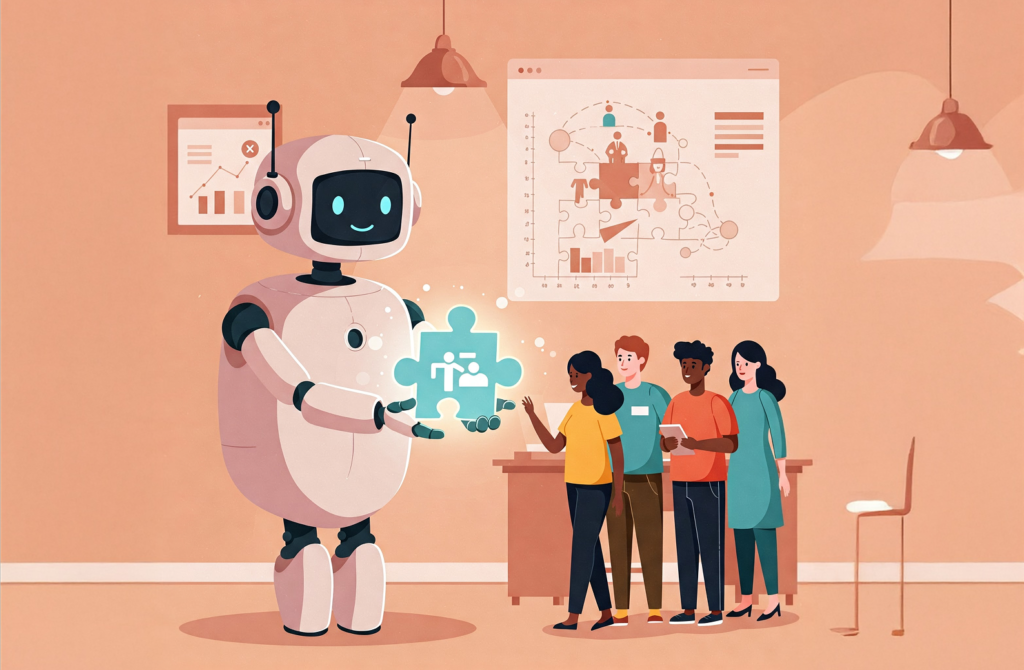
Overcoming Challenges in Integrating AI into Nonprofit Workflows
But these are challenges we can bridge together. For limited budgets and technical expertise, strategic partnerships are key16. Many tech companies and individuals are eager to offer pro-bono support or discounted tools to nonprofits.
Organizations are successfully training staff through free online courses while collaborating with tech volunteers16. Starting small with free platforms like ClickUp automate 68% of routine tasks within weeks14 is a practical way to build confidence and see tangible results quickly.
Data safety and ethical practices are paramount, and thankfully, solutions exist. Robust data governance policies, encryption, and access controls are non-negotiable for protecting sensitive donor information and maintaining trust. Regular third-party audits can significantly reduce data breach risks16.
Challenge → Solution → Result
| Challenge | Solution | Result |
|---|---|---|
| Budget constraints | Collaborative partnerships | 64% cost reduction16 |
| Skill gaps | Staff training programs | 55% faster adoption16 |
| Data risks | Encryption protocols | 91% breach reduction16 |
Open, clear communication about your data processes strengthens relationships with donors. As one coordinator shared: “Explaining our data process built donor confidence, we now get 22% more recurring donations.”16 Regularly reviewing how you use AI through an ethical lens ensures your technology aligns with your community values and mission.
AI for Nonprofits: Empowering Your Mission
In essence, empowering your mission with AI is about tailoring solutions to your organization’s unique DNA17. Modern platforms can analyze your workflow patterns to build custom interfaces. Tools like ChatGPT now draft 60% of grant content while maintaining brand voice consistency18. Clean, organized data is the fuel for these systems, groups using organized databases see a 38% better prediction accuracy18.
Pilot projects help teams test solutions risk-free17. One animal shelter tripled volunteer sign-ups using personalized email sequences powered by behaviour analysis17. This phased approach is key.
Traditional Approach vs Custom Solution Impact
| Traditional Approach | Custom Solution | Impact |
|---|---|---|
| Generic donor emails | Behavior-triggered messaging | 47% higher open rates18 |
| Manual grant research | AI-assisted proposal drafting | 40% time reduction17 |
| Static outreach schedules | Dynamic engagement calendars | 55% more recurring gifts17 |
AI is also redefining program delivery: Qualitative analysis tools can uncover hidden patterns in community feedback. Training programs ensure staff leverage these tools effectively. Groups investing in skill development report 64% faster adoption of new systems17. As one coordinator shared: “Our customized dashboard transformed how we track program outcomes, it’s like having a research assistant for every initiative.”17
By combining strategic planning with adaptive technology, you can craft solutions as unique as your mission, leading to stronger donor relationships, smarter resource management, and communities served with unprecedented precision.
Conclusion
Looking ahead, I truly believe the future of social impact thrives at the intersection of human compassion and smart technology. AI isn’t a standalone saviour; it’s a powerful partner.
By analyzing patterns and automating tasks, these tools free your incredible teams to focus their genius on creative problem-solving and deep human connection19. While not a magic fix for every challenge, they are invaluable for designing targeted strategies that fit your unique organizational needs and amplify your impact.
Overcoming challenges like skill gaps and ethical concerns is absolutely achievable through cross-sector partnerships20, continuous learning, and a commitment to transparency. Remember, success comes from adapting solutions to your workflow, not forcing your team to conform to a rigid system.
I urge you, the leaders and doers in the nonprofit world, to explore how these predictive tools can strengthen your relationships and deepen your reach. Start small (perhaps automating those thank-you emails or exploring a data analysis platform). Keep learning and experimenting, ensuring your strategies evolve alongside the needs of your community.
Are you ready to amplify your mission? Let’s build plans together that combine your essential human insight with the precision of technology. The path forward begins with one step; what will yours be?
FAQ
How can machine learning address common operational challenges in nonprofits?
What benefits do data analytics provide for grant writing strategies?
Are there budget-friendly solutions for organizations with limited technical expertise?
How do we ensure ethical use of donor information with these technologies?
Can translation tools improve outreach to diverse communities?
What measurable impact can we expect from implementing these solutions?
How do we start integrating machine intelligence without disrupting existing workflows?
Source Links
- https://www.dataro.io/blog/artificial-intelligence-for-nonprofits-complete-explainer
- https://www.donorsearch.net/resources/ai-for-nonprofits/
- https://medium.com/doing-work-that-matters/how-ai-is-transforming-nonprofit-communications-021d59fa48d5
- https://www.socialworkportal.com/ai-tools-for-nonprofits/
- https://www.spiceworks.com/tech/artificial-intelligence/guest-article/leveraging-ai-in-nonprofit-sector/
- https://www.designdata.com/2025/03/04/the-role-of-ai-for-nonprofits-in-enhancing-operations/
- https://www.hso.com/blog/ai-and-non-profits-assessing-the-benefits-and-risks
- https://bradyware.com/the-power-and-peril-of-ai-for-nonprofits/
- https://www.linkedin.com/pulse/case-studies-showcasing-how-nonprofits-utilizing-ai-enhance-phillips
- https://www.nonprofits.freewill.com/resources/webinars/a-deep-dive-on-five-practical-ai-uses-for-nonprofit-fundraising-2025
- https://www.bwf.com/ai-for-nonprofits/
- https://www.nonprofits.freewill.com/resources/blog/ai-tools-for-nonprofits
- https://www.classy.org/blog/ai-tools-nonprofits/
- https://clickup.com/blog/ai-tools-for-nonprofits/
- https://www.nonprofitpro.com/article/2025-ai-benchmark-report-how-artificial-intelligence-is-changing-the-nonprofit-sector/
- https://www.hso.com/blog/how-non-profits-can-use-ai-to-unlock-potential-and-overcome-challenges
- https://www.daxko.com/insights/the-beginners-guide-to-ai-for-nonprofits
- https://www.anedot.com/blog/how-ai-can-empower-nonprofit-organizations
- https://mediacause.com/ai-best-practices-for-nonprofits/
- https://ssir.org/articles/entry/ai-powered-nonprofits-landscape
